
Recycling Cutting Fluids with Ultrasonic Tubular Processors

Cutting fluids keep machining operations running — cooling tools, flushing away swarf, and protecting surface finish. But they degrade with use, and disposing of spent cutting fluid is expensive and environmentally costly. Ultrasonic tubular processors offer a way to recycle cutting fluids on site, extending their working life. Why Cutting Fluid Recycling Matters Machining operations […]

Recycling Cutting Fluids with Ultrasonic Tubular Processors Read More »

Ultrasonic Technology for Heavy Fuel Oil: Improving Separation and Efficiency

Heavy fuel oil is notoriously difficult to handle: high viscosity, poor separation of water and contaminants, and heavy reliance on heating to make it workable. Ultrasonic tubular processors offer operators a way to modify viscosity and improve separation without the energy cost of conventional heating. Why Heavy Fuel Oil Is Hard to Process Heavy fuel

Ultrasonic Technology for Heavy Fuel Oil: Improving Separation and Efficiency Read More »

Reducing VOC Emissions in Paint Production with Ultrasonic Technology

Volatile organic compound (VOC) emissions are one of the biggest environmental and workplace safety concerns in paint manufacturing. Solvent loss during production and waste recovery exposes operators to VOCs and adds to a facility’s carbon footprint — and ultrasonic tubular processing is proving to be one of the most effective ways to cut it. Where

Reducing VOC Emissions in Paint Production with Ultrasonic Technology Read More »

Ultrasonic Paint Manufacturing: Faster, Cleaner Production

Paint manufacturing has traditionally depended on basket mills and ball mills to disperse pigments and control viscosity — a process that is slow, energy-hungry, and hard on production schedules. Ultrasonic tubular processors are changing that, cutting production time for a tonne of paint from hours to minutes. How Ultrasonic Processing Fits Paint Manufacture An ultrasonic

Ultrasonic Paint Manufacturing: Faster, Cleaner Production Read More »

Ultrasonic Lube Oil Blending: Cut Production Time Without Heat

Lubricant manufacturers have historically relied on heated agitators and long mixing cycles to blend base oils and additives evenly. Ultrasonic tubular processors offer a faster, cooler, and dramatically more energy-efficient alternative — and it is already running in commercial production. How Ultrasonic Blending Works for Lube Oils Base oils and additive packages are passed through

Ultrasonic Lube Oil Blending: Cut Production Time Without Heat Read More »

The History and Science Behind Sonochemistry in Industrial Processing

Sonochemistry — the use of sound energy to drive chemical and physical change — sits at the heart of every ultrasonic tubular processor. It is not a new idea; scientists have studied acoustic cavitation since the early 20th century. What has changed is that the principle is now doing real, commercial work on production lines

The History and Science Behind Sonochemistry in Industrial Processing Read More »

How Ultrasonic Processors Change Viscosity Without Heat: The Cold Boiling Effect

One of the most counter-intuitive things about ultrasonic tubular processing is that it can radically change a fluid’s viscosity without adding a single degree of heat. Engineers on the production floor sometimes call this the “cold boiling” effect — and it is one of the biggest reasons manufacturers of lube oils, fuel oils and paints

How Ultrasonic Processors Change Viscosity Without Heat: The Cold Boiling Effect Read More »

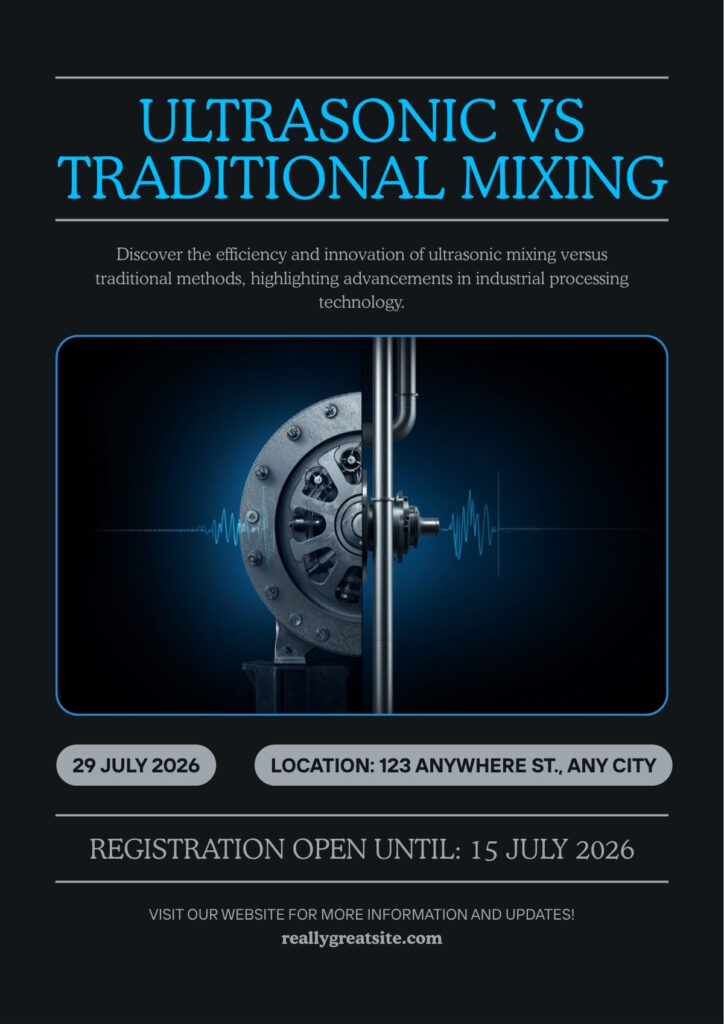
Ultrasonic vs. Traditional Mixing: Why Manufacturers Are Switching to Tubular Processors

Ball mills, basket mills, heated agitators, high-shear mixers — for decades, these have been the default tools for blending and dispersing industrial fluids. They work, but they are slow, energy-hungry, and full of moving parts that wear out. Ultrasonic tubular processors are changing that calculus, and manufacturers are taking notice. How Traditional Mixing Falls Short

Ultrasonic vs. Traditional Mixing: Why Manufacturers Are Switching to Tubular Processors Read More »

How Ultrasonic Tubular Processors Work: The Science of Cavitation Explained

Ultrasonic tubular processors sound like something out of a physics lab, and in truth, they are. The technology that lets manufacturers blend lube oil, disperse paint pigments and modify heavy fuel oil without heat comes down to a single physical phenomenon: acoustic cavitation. Sound Waves at 500 Miles Per Hour Inside a tubular processor, an

How Ultrasonic Tubular Processors Work: The Science of Cavitation Explained Read More »

What Is an Ultrasonic Tubular Processor? A Complete Guide

If you manufacture lubricants, paints, or process industrial fluids, you have probably heard the term “ultrasonic tubular processor” mentioned as an alternative to heat-based mixing and milling. But what actually is it, and why are manufacturers across the UK, Europe and Nigeria switching to it? What Is an Ultrasonic Tubular Processor? An ultrasonic tubular processor

What Is an Ultrasonic Tubular Processor? A Complete Guide Read More »