
How Ultrasonic Processing Works

Explainers on sonochemistry, cavitation and how ultrasonic tubular processors work

The History and Science Behind Sonochemistry in Industrial Processing

Sonochemistry — the use of sound energy to drive chemical and physical change — sits at the heart of every ultrasonic tubular processor. It is not a new idea; scientists have studied acoustic cavitation since the early 20th century. What has changed is that the principle is now doing real, commercial work on production lines […]

The History and Science Behind Sonochemistry in Industrial Processing Read More »

How Ultrasonic Processors Change Viscosity Without Heat: The Cold Boiling Effect

One of the most counter-intuitive things about ultrasonic tubular processing is that it can radically change a fluid’s viscosity without adding a single degree of heat. Engineers on the production floor sometimes call this the “cold boiling” effect — and it is one of the biggest reasons manufacturers of lube oils, fuel oils and paints

How Ultrasonic Processors Change Viscosity Without Heat: The Cold Boiling Effect Read More »

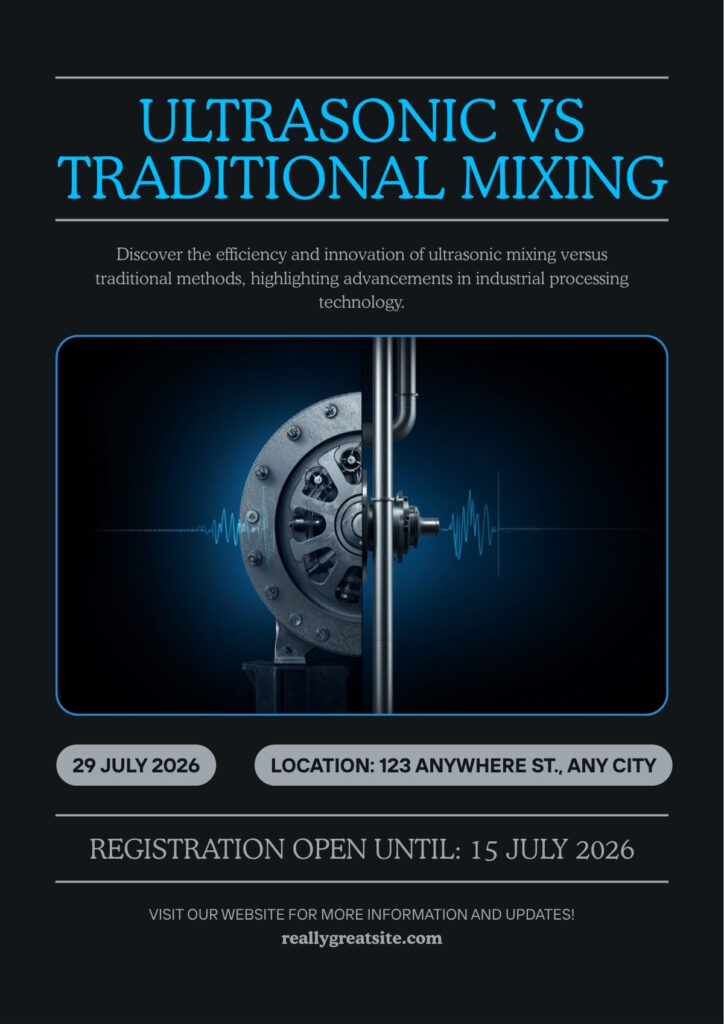
Ultrasonic vs. Traditional Mixing: Why Manufacturers Are Switching to Tubular Processors

Ball mills, basket mills, heated agitators, high-shear mixers — for decades, these have been the default tools for blending and dispersing industrial fluids. They work, but they are slow, energy-hungry, and full of moving parts that wear out. Ultrasonic tubular processors are changing that calculus, and manufacturers are taking notice. How Traditional Mixing Falls Short

Ultrasonic vs. Traditional Mixing: Why Manufacturers Are Switching to Tubular Processors Read More »

How Ultrasonic Tubular Processors Work: The Science of Cavitation Explained

Ultrasonic tubular processors sound like something out of a physics lab, and in truth, they are. The technology that lets manufacturers blend lube oil, disperse paint pigments and modify heavy fuel oil without heat comes down to a single physical phenomenon: acoustic cavitation. Sound Waves at 500 Miles Per Hour Inside a tubular processor, an

How Ultrasonic Tubular Processors Work: The Science of Cavitation Explained Read More »

What Is an Ultrasonic Tubular Processor? A Complete Guide

If you manufacture lubricants, paints, or process industrial fluids, you have probably heard the term “ultrasonic tubular processor” mentioned as an alternative to heat-based mixing and milling. But what actually is it, and why are manufacturers across the UK, Europe and Nigeria switching to it? What Is an Ultrasonic Tubular Processor? An ultrasonic tubular processor

What Is an Ultrasonic Tubular Processor? A Complete Guide Read More »