
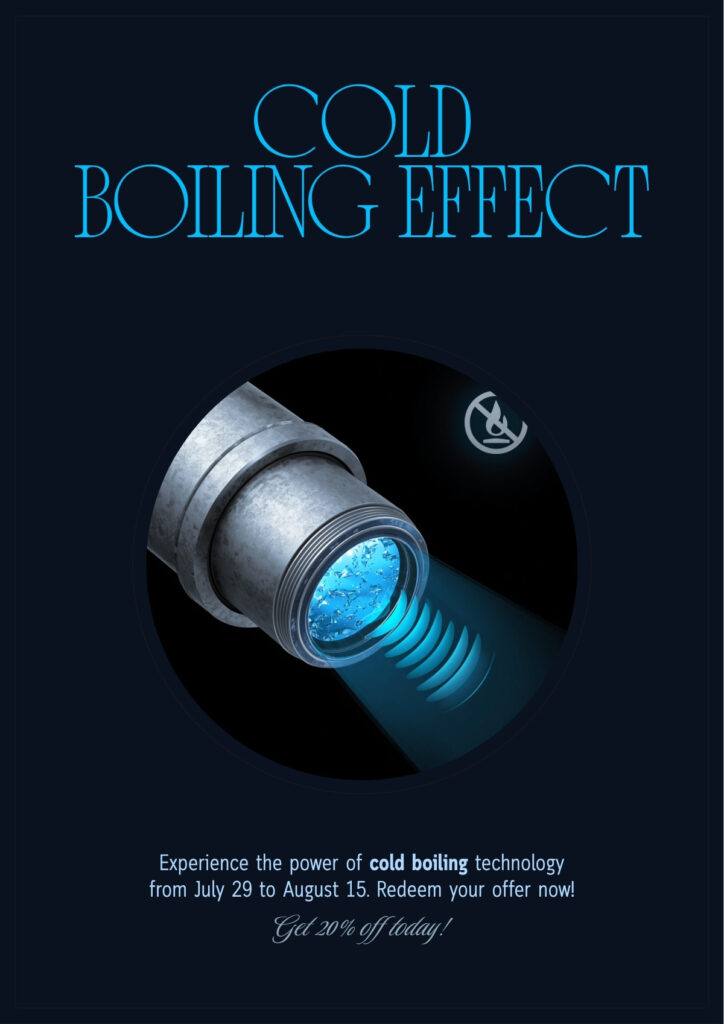
One of the most counter-intuitive things about ultrasonic tubular processing is that it can radically change a fluid’s viscosity without adding a single degree of heat. Engineers on the production floor sometimes call this the “cold boiling” effect — and it is one of the biggest reasons manufacturers of lube oils, fuel oils and paints are adopting the technology.
Why Heat Is Usually Needed to Change Viscosity
In conventional processing, viscosity is typically reduced by heating a fluid, which loosens molecular structure and lowers resistance to flow. The problem is that heating is slow, energy-intensive, and often reversible — the fluid thickens again once it cools. Heat can also degrade temperature-sensitive additives, pigments and formulations, and heating and cooling cycles add hours to a production run.
How Ultrasonic Processing Achieves the Same Result Without Heat
Instead of thermal energy, an ultrasonic tubular processor uses acoustic cavitation. Sound waves passing through the fluid at around 500 miles per hour create and instantly collapse millions of microscopic bubbles. The implosion energy released breaks down molecular and particle structures at a microscopic level, altering how the fluid flows — without raising its bulk temperature.
This is why the effect is nicknamed “cold boiling”: the intensity of the process resembles boiling in terms of the energy released at a micro scale, but the liquid itself stays cool.
Where This Matters Most
- Heavy fuel oil — ultrasonic processing can modify viscosity to improve separation and handling without the energy cost of conventional heating
- Lubricant blending — additives and base oils can be blended at ambient temperature, protecting sensitive formulations
- Paint manufacture — pigment dispersion and viscosity control happen in one pass, without the risk of heat-damaging binders or solvents
The Knock-On Benefits
Because there is no heating and cooling cycle, production runs faster — there is nothing to wait for the fluid to warm up or cool down. Energy costs drop sharply, since heating large batch volumes is one of the most energy-intensive steps in conventional processing. And because temperature-sensitive formulations are not exposed to heat stress, product quality and consistency improve.
There is a safety dimension too: processing without high heat reduces the risk of thermal degradation, off-gassing, and the handling hazards that come with hot equipment and hot product.
Proven at Commercial Scale
This is not a theoretical benefit. Hilsonic’s ultrasonic tubular processors are already used commercially to blend lubricating oils and manufacture paint without heat, and to modify the viscosity of heavy fuel oil to improve separation in onshore and offshore operations.
To see the cold boiling effect demonstrated on your own product, get in touch with Hilsonic to arrange a free, no-obligation presentation. You can also read more about the cavitation science behind the effect.